Oman: Dreaming under desert stars to sleeping in the height of luxury

IMG_6958

Infinity pool, The Chedi, Muscat

Given that Oman is one of my all-time favourite travel destinations, it makes sense that I have found a few places to rest my head. I thought I would share the best of them with you.

The Chedi, Muscat

The Chedi, Muscat, opened 13 years ago and is a luxury 5-star hotel in Al Azaiba, northwest Muscat on a private beach between the international airport and Muttrah.  It has 158 well appointed rooms and the hotel grounds abound with water features and tranquility.

The choice of restaurants is good and the cuisine excellent although not inexpensive. My favourites are lunch at Serai Pool, fine dining at The Beach Restaurant or the atmosphere of the Arabian Courtyard, followed by Shisha in the lounge.

Whether you are escaping the winter of Europe or looking for some downtime on a stopover from Australia and New Zealand, this is a great choice for that relaxing break. There are 3 well-appointed pool areas to cater for everyone from the family friendly Serai, to the stunning beachfront infinity pool and cabana, to the amazing 100m swimmers dream pool. The spa offers a multitude of pampering delights to meet your jet lag recovery needs.

The hotel staff are courteous and attentive and the location means it is easy to see the sights of Muscat. This kind of luxury does not come cheap of course and prices start from $340 per night.

The Chedi Muscat

Location – Google Map

Sahab Hotel, Jebel Akhdar

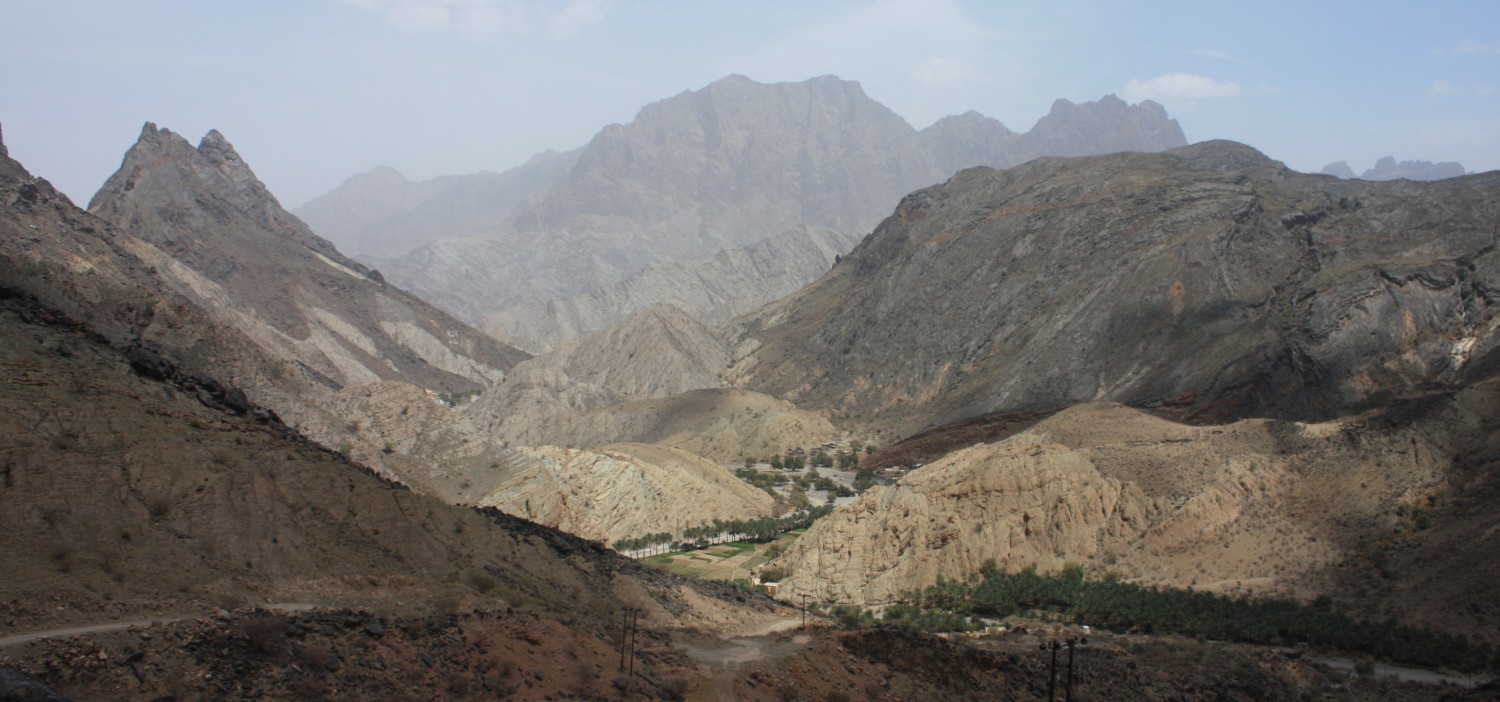
No trip to Oman would be complete without a journey into the western Hajar Mountains. You need a 4wd for the trip and you will be rewarded with breathtaking views (see Captivating Oman).

IMG_7068

Enter a caption

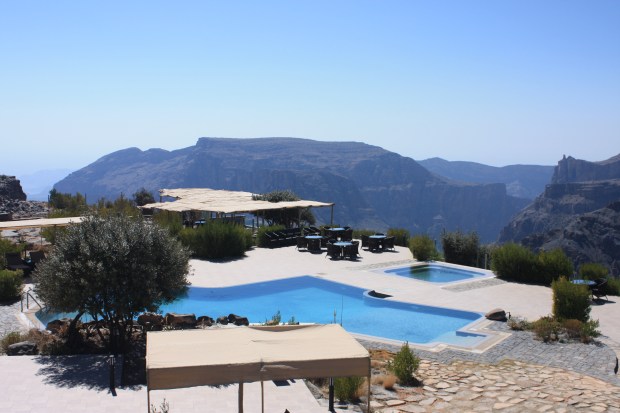
I stayed at the small boutique Sahab Hotel, 2,004 meters above sea level on Jebel Akhdar. It has the most spectacular views and is worth the, at times, scary drive up the mountain road.  You have to pass a checkpoint at the base of Jebel Akhdar and, if you are not in a 4wd vehicle, you will be turned back.

Based on the Saiq Plateau the hotel has vistas of mountains and escarpments and ancient villages with their famous terraces of roses and pomegranates. There are a number of good hiking day tours to take. I walked down the mountain through the ancient villages for 3 hours and was collected by the hotel owner by car for the return journey.

There are a number of activities that can be organised through the hotel staff including goat herding, farming with locals, donkey rides, star gazing and, if you are more adventurous, caving trips.

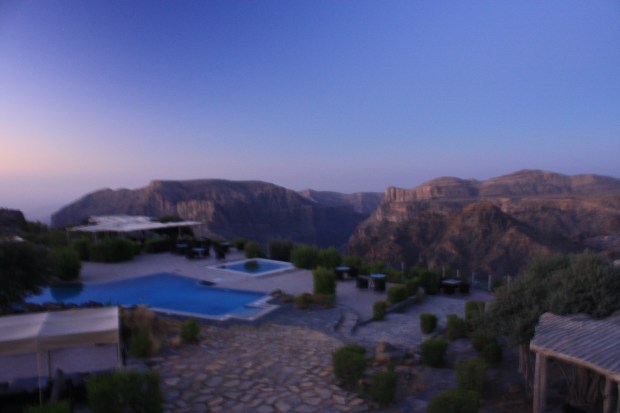
When I stayed it was during December and nights were extremely cold but it was rather refreshing to have a dip in the heated pool and watch the sun set over the mountains. Magical!

IMG_7201

Enter a caption

Sahab Hotel, Jebel Akhdar                                                                                   © Wanderers Dreams

© Wanderers Dreams

Prices are upwards of $250 AUD or 71 Omani Rials per night in peak season (23 Dec – 9 Jan and April to May when the roses bloom). There are only 27 rooms so be sure to book early.

Sahab Hotel Website

Location map

There is a newly opened hotel Alila Jabal Akhdar that I have not yet stayed at, but fully intend to try out on my next visit to Oman.

There is a newly opened hotel on the plateau, the Anantara Jabal Akhdar, however this is a luxury hotel and looks to be approximately $650 per night.

Anantara Jabal Akhdar

Desert Nights Camp

IMG_6045

Desert Nights Camp, Wahiba Sands

© Wanderers Dreams

The Desert Nights Camp is situated on the Wahiba/Sharqiya sands, a 2-hour drive from Muscat. Set admit 11 km of dunes, the camp is luxury with the desert experience. The night sky is truly awesome and the colours of the shifting sands change in the amazing dawn and dusk light.

The camp offers a range of activities for your desert stay including a memorable Sunset camel safari, 4 hour day time camel tracks, 4WD Dune bashing, quad biking, and sand boarding. Locally you can visit a Bedouin family house and enjoy the traditional Omani hospitality of coffee and dates or take a short drive and swim in the green waters of Wadi Bani Khalid. It is worth staying 2 nights.

There are 26 luxury tented rooms decorated in Arabian style. The rooms are air-conditioned (a necessity in the summer) and all have en-suite bathrooms complete with toiletries.

There is a restaurant on site which serves traditional Omani fare and offers local music around the campfire.

The cost of a two night stay is approximately  $1300 per tent in January 2017

Desert Nights Camp

Location Map

© Wanderers Dreams

Sultry Salalah in Dhofar Province,Oman

First visits to Oman usually focus on the major attractions in the north of the Sultanate. In my experience, it is well worth adding a few days to explore the southern Dhofar region of Oman including the provincial capital city of Salalah.

I first visited Dhofar in February 2013 when it was  a dry, sun-parched brown and returned during the khareef in August 2015 to experience its transformation to glorious verdant greens. This province of Oman has a unique climate and is especially attractive to visitors of the Arabian Peninsula in the height of summer, when the air is cool and the mists and rain provide welcome relief from the searing temperatures of the rest of the peninsula.

Visitors from all over the Arabian Peninsula flock to Dhofar to enjoy picnics in the drizzling rain, a choice that would be strange under normal circumstances to an Australian or Briton, but seems natural when you are there. Wadi Dharbat is a popular spot off the Mirbat Road and, the day my Omani companions and I visited, was replete with the sound of happy laughter drifting in the breeze.

Surprisingly, this is not all Dhofar has to offer. There are a number of sights to explore as day trips from Salalah and if you travel north for approximately 3.5 hours, you will find yourself at the edge of Rub Al-Khali, the Empty Quarter. A vast wilderness of deserts sands made famous by English Explorer Thomas Bertram in his expedition to cross the desert from Dhofar to Doha (1000km), arriving in February 1931 and by Wilfred Theiseger in his book Arabian Sands. This year a small party from Outward Bound Oman made this inspirational journey documenting their adventure at Crossing The Empty Quarter and a soon to be published book:

https://www.facebook.com/CrossingEQ/

http://www.crossingtheemptyquarter.com

It was the original account of Theiseger and his amazing journey and survival against the odds, that inspired my fascination and dreaming of the desert therefore I was excited to find myself at the gateway to Rub Al-Khali for the first time. The vast sea of dunes, dappled with wind blown art and, the incredible silence, made me feel so small and insignificant. The beauty in lone plants surviving  the harsh environment and the wonderful light made for stunning photography. I sat atop a dune and reflected on what it must have taken to set out across a seemingly infinite desert.

I travelled to Rub al Khali with a guide in a 4WD for a day trip but there are companies who operate camping excursions further into the desert (see travel information at end of article) and this is something I have every intention of doing in the future.

On the drive to, or from, the desert, take time to visit the archeological site of Shisr believed to be the lost city of Ubar (“Atlantis of the Sands”) and discovered in 1992 by a group of US researchers and British Explorer, Ranulph Fiennes, using satellite technology. The city is thought to have been the crossroads of the frankincense trail and an important trading centre.

Oman is world renowned for the frankincense trees and their aromatic resin and this area is reputed to have been the starting point of the journey of the three Magi or wise men on their way to Bethlehem. The groves are numerous and I learned that that there are 3 grades of frankincense with the white colour the highest quality.

Day trip to Job’s Tomb

The tomb of the prophet Job is just 35km north of Salalah on the hill top of Jabal al Qara’ and is well worth the drive. En route to this important religious site, I met camels crossing the road, cattle and goats grazing under shady trees and visited frankincense groves.

There is a nominal charge for visiting the site (baisa rather than rials) and you are allowed to take photos. Out of respect for this religious site I covered my head during my visit.

Coastline of Mughsail & Sarfait Road

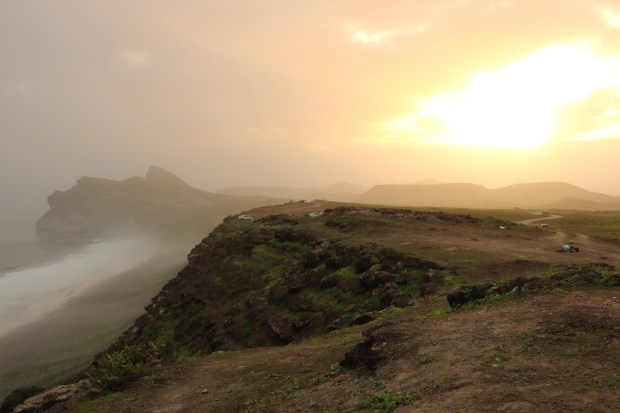
One of my favourite spots during my two visits to Salalah, was the rugged, spectacular coastline west of Salalah at Mughsail. I watched the fishermen repairing the nets in the bay and the frenzy of seabirds as the boats returned to shore with their precious cargo.

At the visitor centre, I enjoyed watching young children startled by the blow holes when they suddenly unleashed the power of the sea and the shrieks of joy as the cold water cascaded down on them.

I travelled with Omani friends last year and we took the Sarfait road beyond Mughsail towards Yemen (2 hours away, so there is no risk despite current troubles in Yemen). The views from this impressive, British designed road, are breathtaking.

IMG_1940

IMG_1941

© Wanderers Dreams

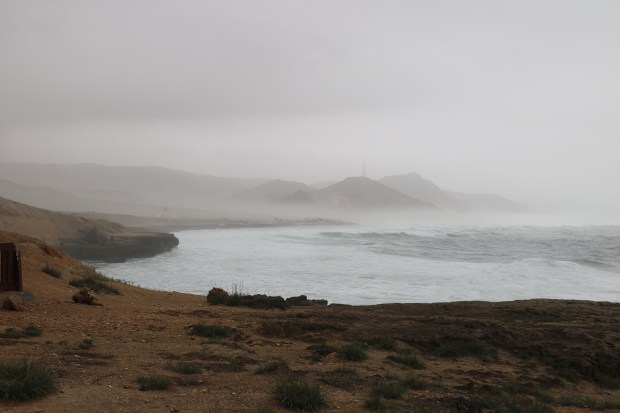
On this windy steep road, we climbed nearly 1000m in the car and at the top I gazed back at Mughsail, blanketed in a coastal haze that made it even more impressive. The road stretched onwards downhill with more u bends and views into wadis where camels grazed. The rocks, mainly limestone, are sparsely populated with succulents, some small boabs and, in places coastal frankincense trees.

We drove back to the cliff tops just above the bay of Mughsail and picnicked with glorious views in both directions.

We watched the sunset over the cliffs and the sea and I felt enormously privileged to be able to travel to such awe-inspiring destinations

IMG_5266

© Wanderers Dreams

Travel information

On the first trip to Dhofar, I stayed at the 147 room Hilton Salalah Resort hotel about 15 minutes outside Salalah on the highway to Mughsail and the shores of the Indian Ocean. Current prices approximately AUD$350 per night for August 2017

Address: As Sultan Qaboos St, Salalah 211, Oman

Phone:+968 23 133333

http://www3.hilton.com/en/hotels/oman/hilton-salalah-resort-SLLHIHI/index.html?WT.mc_id=zELWAKN0EMEA1HI2DMH3LocalSearch4DGGenericx6SLLHIHI

In August 2015, my choice as a base was the Salalah Rotana Resort at AUD$352 per night including taxes as this was peak season.

Address: Taqah Road Souly Bay, Taqah Road, Salalah, PC 215, Oman

Phone:+968 23 275700

http://www.rotana.com/rotanahotelandresorts/oman/salalah/salalahrotanaresort

For excursions into the Rub al Khali:

One company who operate camping excursions further into the desert over 4 days is

Silk Road Tours Oman / Salalah Tour Oman, Salalah, Oman

Phone: +968 9066 5544

Mobile: +968 9949 3655

Email: mohamed_salalahtour@yahoo.com

Internet: tour-salalah.comsalalah-tour.com


Captivating Oman

The city of Muscat, in the Sultanate of Oman is just a one-hour flight from Dubai, and I’ve obtained my tourist visa on arrival.

At my city hotel I’m met punctually, by professional guide, Yousef Al-Jabri, from one of Oman’s most reputable tour companies. He’s impeccably turned out in traditional dress, and welcomes me warmly. I choose the passenger seat of his 4WD, to enjoy the amazing views and listen as Yousef teaches me about the culture of Oman, its openness and ability to combine tradition with freedom. His Majesty Sultan Qaboos, the highly respected Head of State, has instigated huge changes since the 1970s, building schools in every village, exchanging connecting desert tracks for sealed roads and creating infrastructure to encourage progress and growth.

I have long been excited about this visit to Oman and can quickly tell that my six night round trip won’t disappoint. First stop is the bustling fish market at As-Seeb, Oman has a long sea-faring history and fish is a diet staple.

From As-Seeb we venture 100 km north to the restored fort at Nakhal. Constructed in 1834 of mud and straw with palm frond ceilings, it’s built on the foundations of a pre-Islamic structure. I gaze from the watchtowers to the beautiful Hajar mountains nestled above the date palm farms, from which the fort derives its name.

We pass through these farms with their ancient Falaj irrigation, to the natural hot springs of Ath-Thowra (meaning ‘to boil’) where I dip my feet in the water, inviting the fish to give me a natural pedicure.

We take the 43 km drive over an unsealed road to Wadi Bani Auf and on to the dramatic, narrow, twisting Snake Gorge. It is a popular trekking route, but caution’s required during the rainy season as flash floods can prove fatal.

Stopping on the descent into Bilad Sayt, we photograph this picturesque,
old village with terraced fields and mud-baked houses, then park outside the village, amble through the streets, and enjoy the shade of the date palm terraces.

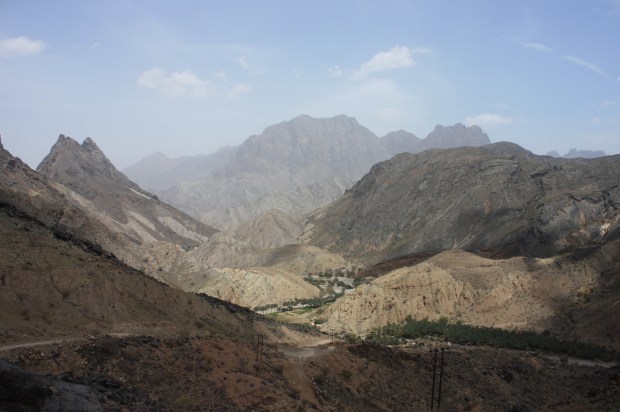
Leaving Bilad Sayt, we start to traverse the Hajar Mountains, a four hour, 70km drive that is truly spectacular. It is not often on my travels that I feel so completely overwhelmed with beauty and a spiritual sense of connection – emotions I hadn’t anticipated in Oman.
IMG_5795

Breathtakingly beautiful Hajar Mountains, Oman

The road from Bilad-Sayt is a winding ascent with a series of u-bends. Turning the last bend, the view quite literally takes my breath away. My ‘stop now, please’ request startles Yousef who thinks I’m suddenly taken ill. He relaxes when he realises that this mad English-Australian lady just wants to take a photo – although no photograph could capture this outstanding natural beauty.

We descend into Al-Hamra village at the foot of the Hajar Mountains, one of the oldest villages with well-preserved Yemeni-style mud-brick houses. In the small museum, Bayt Al-Safa, there’s a taste of life as women lived it.

I try my hand at pounding wheat to flour, observe women weaving traditional patterns using a loom, have my forehead painted with a sandalwood and saffron henna mix as the women would for weddings. After hhe tour, I enjoy the hospitality of the museum staff in their upper room majlis (sitting room) listening to other travellers’ tales and fortunate to hear the Arabic discussions of visiting village elders.

My overnight stay is a tent at The View, overlooking the town of Al-Hamra. The sounds of goat bells and a herdsman – such a pleasant alarm clock – wake me, it’s wet, windy and dusty but very peaceful and on a clear day the sunrise would compensate the early start.

After breakfast we take the road along Wadi Ghul, known in Oman as the Grand Canyon of Arabia, and head for Jebel Shams, Mountain of the Sun, at 3075 m, Oman’s highest mountain. Our 4WD copes well with the partly unsealed road, and there are barriers to help prevent accidental plunges down the 1000 m drops. The views from the summit are awesome and, gazing down into the canyon, I watch falcons catching the warm air currents looking for prey.

IMG_5867On the return journey, we stop at the village of Ghul and, armed with a plentiful water supply,
take a memorable short walk into the canyon
through the date palms and beautiful pink flowers of the Oleander.

From Ghul, it’s a short drive to BaHla, famous for its potteries and locally, for its legendary evil spirits, the Jinn. BaHla fort, a UNESCO World Heritage site dating from pre-Islaamic times, is being restored and has since been opened to the public.

By this stage, my appreciation of forts is on the wane, but it is completely restored by the beautifully preserved Jabrin Castle, undoubtedly my favourite. Constructed in 1675 by the Imam Bil-arab bin Sultan as a centre of learning, (astrology, medicine and Islaamic law) it offers great insights into the way of life in a bygone era. I am amazed at the skillfully carved doorposts and doors, painted ceilings and Arabic calligraphy, all of which speak of a rich artistic heritage.

There are excellent examples of falaj – primitive air conditioning, used also for pouring hot date honey onto ill-advised marauders – date stores and multiple majlis. Despite the heat, I climb the keep to gaze delightedly over the surrounding plains to the mountains.

We enjoy lunch in Nizwa, a large town about two hours from Muscat. It’s popular and ideally situated for exploring the area, so pre-booking a hotel is essential. Nizwa’s not always been hospitable to travellers, as famously described in Wilfred Theiseger’s Arabian Sands, when its conservative Iman threatened the author with imprisonment or death.

I briefly relish the wonderful views of the town from the round tower of 17th century Nizwa fort before spending the morning browsing the Souk for souvenirs, engaging with friendly locals tolerant of my simple Arabic.

Refreshed after a night in Nizwa, Jebel Akhdar, ‘the green mountain’, beckons. It is so called due to its climate, fruit orchards, and the gardens of roses for producing rosewater. The downward journey from the plateau is treacherous, and entry to the mountain road without the low gears of a 4WD is forbidden. In the foothills lies the ancient village of Birkat Al-Mawz, ‘pool of bananas’, though the plantations are now mainly dates as, according to Yousef, the bananas were wiped out by disease.

Leaving the mountain ranges for desert sands, we take the highway to Ibra and on to the Bedouin village of Bidiyyah, on the edge of Wahiba Sands. The village is a three hour drive from Muscat and half this from Nizwa.

I am spending two nights at the luxury, air conditioned Desert Night Camp just within the sands. Alternatively, choose the more authentic 1000 Nights Camp 19 km into the desert, with traditional Bedouin Goats hair tents and the luxury of a swimming pool. Both camps offer camel trekking, horse riding, dune driving, sand boarding and buggy driving, guided by local Bedouin who are extremely knowledgeable about the desert.

We visit an authentic Bedouin tent, politely remove our shoes and accept their famed hospitality, coffee with cardamom, tea and dates. The friendly women chat to us in a mix of Arabic and English, sharing a joke or two, enjoying the universal language of laughter.

I enjoy the peace and tranquility of a morning camel trek. The gracefulness of these “ships of the desert”, their easy sway and the only sound, their footsteps in the sand, transports me to another era. I am staggered by the agility of my Bedouin guide, who seamlessly transitions between precarious riding positions. He explains to me how the Bedouin would navigate across the desert, understanding the shifting sand landscape and using the sun, moon and stars as navigational aids.

Driving through the desert is a reminder of its scale and the outstanding beauty of this harsh environment. It captivates and enchants its visitors, whether with the romantic notion of Arabian nights and Scheherazade or the clear skies, shifting patterns of sand, and changing light from dawn to dusk.

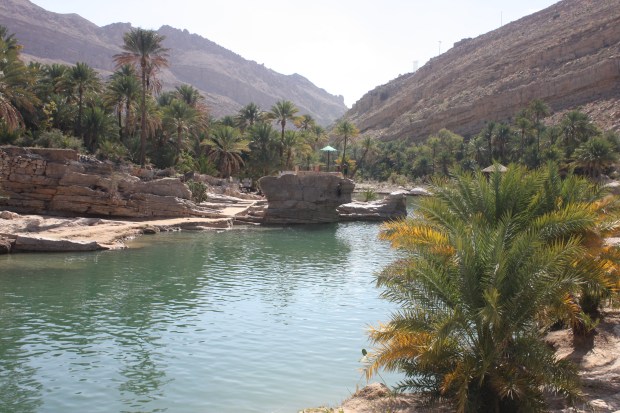
From the desert camp, we travel to Wadi Bani Khalid, a canyon with pretty date palm farms and small villages, famed for it’s natural beauty. Due to the natural spring in the mountains there’s a clear, blue pool of water all year round where people swim, enjoying the coolness. There’s a path along the canyon to Moqal Cave and a small cafe by the pool for refreshment on the way back.
IMG_8271

We continue our journey to Sur, a sea-faring town on the Gulf of Oman, where I enjoy watch the carpenters ply their centuries-old craft of building traditional dhows, and visit the small Maritime museum nearby.

In the evening, we drive an hour up the coast to Ras Al-Jinz, famous for its endangered green turtle nesting site. Booking is essential and escorted tours start at 9pm every evening. It’s possible to stay at the reserve and join a dawn tour to catch the last few departing turtles.

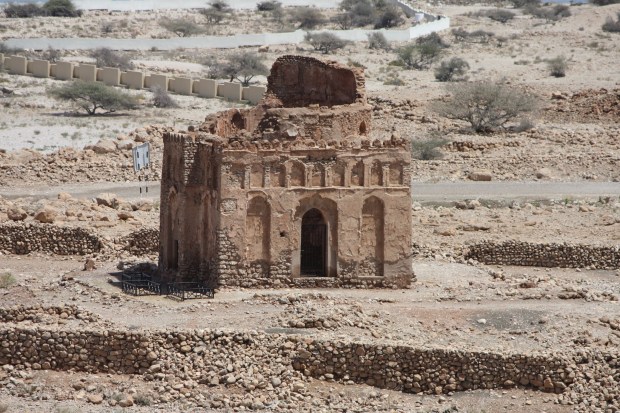
The end of my road trip is along the Sur-Qurayat coastal highway. We visit Bibi Miriam’s tomb at Qalhat, stop for a memorable swim at beautiful Fins Beach before proceeding to the Bimmah Sinkhole in Hawiyat Najm Park, enjoying the gatekeeper’s hospitality before returning to Muscat.
IMG_6088

Bibi Miriam’s tomb, Qalhat

The descent into Muscat reveals a city of white houses basking in the sunlight nestled between the mountains and the beautiful Indian Ocean, a befitting end to a captivating journey!

© Wanderers Dreams All content and photographs