Arabian luxury

Those who know me well know that I have a passion for the Arabian Peninsula. I am also lucky enough to have travelled for business as well as pleasure and have stayed in some amazing hotels around the world.  My all time favourite (to date!) is the  One & Only Royal Mirage in Dubai, UAE.

The hotel is situated on a kilometre of private beachfront overlooking Palm Island Bay, it is set amidst 65 acres oasis of lavishly landscaped gardens, just minutes away from Dubai Marina.

Royal Mirage location

There are 3 buildings linked by pathways and gardens, The Palace, The Residence and Spa and the Arabian Court. Each has top end restaurants, beautiful swimming pools and access to a private beach. I have stayed at this beautiful hotel a number of times since 2008 and it has never failed to deliver beyond my expectations.

The Arabian Court is my favourite being magnificently appointed with Arabian architecture and styling. One of the memories that stays with me most is the fragrance of frankincense that wafts throughout the corridors and the atmospheric lighting, It makes me feel like Scheherazade from 1001 Arabian Nights from the moment I cross the threshold.

2010_01_03_0601

On arrival you are seated and treated to traditional Arabian hospitality, tea and dates whilst being checked in – your bags are already on their way to your room. The service is truly exceptional and, consistently that way.


During each of my visits I have found the restaurants to be of the highest standards. I personally love dining at Tagine, the traditionally Moroccan styled restaurant with an a la carte menu of flavoursome Moroccan salads and a host of tagines or the “mistress of spice” Indo-Eurasian Nina, brimming with flavour from biriyanis to tandooris. These are     just two of the eight high quality dining experiences. As a lone traveller and a woman, I have always been made to feel welcome, even if staff have been a little surprised to find I am unaccompanied!  In fact, they have often gone out of their way to be engaging,  respectful and charming.

My favourite pastime after dinner is to enjoy coffee, shisha (there are a multitude of flavours to choose from) and live music at the Arabian Courtyard, providing an Arabian feel to a night under the stars. They serve a great choice of mezze too, should you want a more casual food choice. End the evening with a cocktail or two at the roof top bar just above. There are 4 bars and lounges and The Jetty is a popular and vibrant evening spot overlooking The Palm Island.


To refresh the body and soul a special treat has to be the The Royal Hammam at The Residence Spa, which is truly indulgent and an experience not to be missed (approx 400 AED).  The aroma of the Ghassoul black soap, the steam room, full body scrub and wonderful honey mask is pampering at its best! The spa at The Residence is truly world class with a range of treatments and massages to suit all tastes.

Of course, luxury and good service does not come cheap and so this hotel is not inexpensive. For 5 nights in a deluxe king in the Arabian Court in September 2017 expect to pay just over $6400 AED or approx. $2300 AUD per Deluxe Room at the Arabian Court.

This slideshow requires JavaScript.

©Wanderersdreams.com – all content and photos


Breezy Bribie Island

There is nothing quite like taking a day’s leave and stealing away on a wintery Friday morning for a long weekend in the restorative Queensland sun.

In July 2016, I left Sydney for Brisbane airport (Qantas flight $225), arriving at 9.30am where I picked up a 4WD in the hope that I would be able to drive into the National Park at my destination, Bribie Island. Note: With Avis there is an exorbitant $5000 excess unless you take their additional insurance cover. Almost enough for a deposit on a small car!

Just an hour and 15 minutes north on the motorway to the Sunshine Coast, Bribie Island is one of the lesser-known Moreton Bay islands and has the added advantage that you can access by car over a bridge from the mainland. It has a very relaxed vibe and is relatively quiet.

A short drive beyond the bridge is a small tourist information booth. It is worth a stop if only to pick up the tide timetable, a necessity if you want to walk the beach from one side of the island to the other. It was here that I also discovered you need to be an experienced sand 4WD driver and have more than 1 vehicle in your party, as it is common to get bogged in the sand and need a tow out.  If you are a competent sand driver you still need to get a permit from the National Parks Office before you can enter the national park area of Bribie Island.

I stayed at the Bribie on the Beach Resort in Woorim in a 2 bedroom apartment at $475 for 2 nights. The apartments are well-appointed with access to the surf beach facing Moreton Island. The thing I loved most about my stay was waking up to the sound of waves breaking on a sandy shore! Heavenly!

This was a weekend getaway from the Sydney winter and, being outside of the school holidays, the beach was pretty empty and I was able to find a myriad of places to sit where I was totally alone until a beach walker or two drifted past. Having arrived just before midday, I set out to walk south on the beach for an hour each way and in that time I saw fewer than 20 people (including a small group of budding marine biologists from the local school)!

20160729_123452

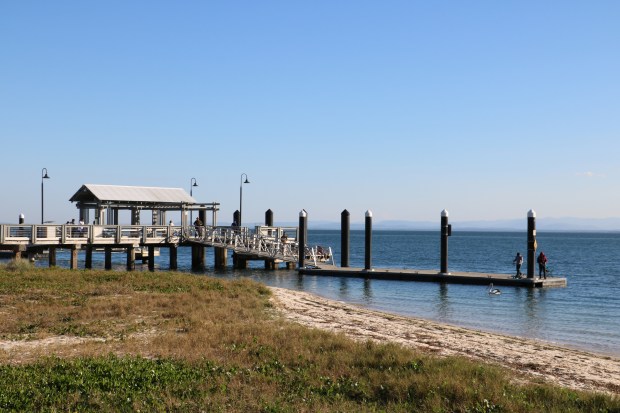
It is possible at low tide to walk around the beach to the bayside jetty – a brisk 2-2.5 hours each way. This needs to be carefully timed to miss high tide or you can walk one way and either get a lift to the jetty and walk back or catch a taxi back the other way. The clarity and blue hue of the sea is beautiful and the beach is framed by sand dunes. I drove to the jetty on the bayside and sat on the promenade watching life pass by. The jetty is used a lot for wedding photos and is very picturesque.

img_6724

I drove back through the town to take the walk from the yacht club, along Banksia Beach, to the Paradise Beach Marina entrance. The goal was to catch the magnificent sunset over the bay with the Glasshouse Mountains in the distance. It took me approximately half an hour as I stopped for photo opportunities along the way. I passed locals who either said “Hello” or stopped me to pass the time of day…not something you experience very often in the hustle and bustle of Sydney life!

The views from the gardens before the marina entrance are enchanting and with the trees and palms silhouetted against the flaming, setting sun with the distant Glasshouse Mountain jutting above the waterline, it was a photographers dream. Even locals still take time to sit on a bench of bring a chair and a glass of something to watch this magnificent display of nature on a weekend evening.

Dining is mainly casual and, if you are looking for a beachfront location the Bribie Island Surf Club has a good Bistro and will welcome you for relaxed dining.

There are a myriad of activities available including fishing, bird-watching, cruising, kayaking, golf and 4WD. In addition, there are a number of historical military installations (WWII forts and gun emplacements) on the north side of the island and a museum. See the Tourism Bribie Island website for more information.

My stay was about rest and relaxation – time to read and recover from the relentless corporate world. Mission accomplished!


Harmonious Hoi An, Vietnam

We took a plane from HaNoi to Danang in Central Vietnam and were met by our guide at the airport for the short drive south to the former trading port of Hoi An, located on the Thu Bon River. The region has been inhabited since the late iron age, over 2000+ years ago. Its more recent history was as a vibrant port with Arab, Chinese, Dutch, French, Japanese and Portuguese merchants throughout the 16th to 18th centuries. There is evidence of this presence in the historical buildings throughout the old town and dotted along the river. It is a UNESCO World Heritage site with more than 800 traditional houses  and buildings preserved.

Our stay in Hoi An was one of our favourites from this trip and both my daughter and I were glad we had chosen to spend 3 days/2 nights in this bustling town.  On arrival we stopped for lunch at Miss Ly cafe and enjoyed traditional vietnamese spring rolls, meat wonton and a cool water. The street was alive with a steady flow of bicycles and mopeds and we loved having a ringside seat.

The experience here was very different from Ha Noi, the old town is pedestrian and had a relaxed, breezy feel to it. After lunch, we ventured on a walking tour with our guide after the purchase of an Old Town admission ticket (120,000VD) from a booth at the end of the street. The addmission ticket allows you entry to all the historical buildings. The first stop was the beautiful Chua Ong Pagoda on Tran Phu Street, which was built in 1653 to honour the Chinese General, Quan Cong, who is venerated as a symbol of loyalty, integrity and justice. When visitors make offerings the custodian strikes a large bronze bowl.

From the pagoda it was a short walk to the Phuc Kien Assembly hall (open from 7am to 5.30pm). It is now the Jinshang Temple of Thien Hau, goddess of the sea and who protects sailors.  At the back of the temple is an altar which has seated figures which represent the Fujian families who fled China for Hoi An in the 1600’s.

It was lovely to walk the streets and look at the old buildings, and whilst it was very humid it was bearable. It was very picturesque, with something to catch the photographers eye with every few paces!

We visited an old  Vietnamese ancestral house, Tan Ky, which backs onto the river and has survived for 200 years and been home to a number of generations. There are influences from other cultures too, including some beautiful mother of pearl inlays of Chinese poetry formed as birds in flight.

Our final stop of the first day was the famous covered Japanese bridge, which arches beautifully across the Thu Bon river and was opened by Nguyen Phuc Chu Lord in 1719, who carved three Chinese symbols above the door in commemoration. Sculptures celebrating the Chinese year in which the Japanese emperors were born depict two dogs and two monkeys and also mark the year of the dog when the bridge building was commenced and the year of the monkey, when it was completed. The bridge provided the crossing to the Chinese quarter of Hoi An.

After our tour we took a river trip for an hour up the Thu Bon river. It was beautiful on the water, with a refreshing light breeze.  We passed old merchant houses set on stilts above the water or nestling on the banks of the river.

We watched some Vietnamese fishermen casting nets in the traditional way and they displayed their skills for us to photograph. We suspected that they wait until the tourist boats come and make their money though fishing for tourist dollars after their display! Fair enough I guess!

We retired to the beautifully named My Heart room at the Almanity Hotel, 326 Ly Thuong Kiet Street for dinner in the hotel restaurant and a good nights rest.

The following day, we were scheduled to take part in a cooking course at the Red Bridge Cooking School on the Thu Bon river. We were met by a representative of the school and proceeded to visit the local market to see for ourselves where fresh produce was bought. It was an assault on the senses with vibrant colours and rich, aromatic spices filling the air one minute, followed by the slightly less pleasant smells of fish, seafood and meat resting in the morning heat.  The hustle and bustle of locals and tourists going about their business meant the clamour of voices, laughter and the shouts of merchants vying for shoppers to buy their products.

Next we boarded a boat for the short trip to the Red Bridge Cooking School. Now, to say that both Lydia and I are challenged in the kitchen would be somewhat of an understatement! We were both a little concerned as to whether we would enjoy the class and if we would be a complete disaster compared to our fellow chefs!

The morning was fabulous, the chef patient and we were inspired.  We made Vietnamese spring rolls with our own hand made rice paper, a salad and traditional noodle soup.  Even better, we sat down with our fellow novice chefs to enjoy the fruits of our labours. The recipes are printed out for you so you can replicate the culinary delights on arrival at home. We would recommend this activity as great value at a cost of approx. $100 (booked in Australia before we travelled).

That evening we walked into the town from our hotel, had a fabulous dinner at the Green Mango restaurant and then strolled along the river enjoying the lights, music and thronging crowds. There were many children and elderly Vietnamese selling candles to float on the river for small amounts of Dong.  After being approached by many people in the course of the evening we were a little weary with this.

A very elderly woman approached us on a quiet stretch of river beyond the bridge where we were to all intents and purposes alone. I apologised and went to walk away at which point my 22 year old said “Mum did you see she was only wearing one shoe?”  I had not noticed,  but we had just spent our last Dong and, as we were leaving Vietnam the next day, I had no change.  I felt compelled to go to the ATM up the road, gave my daughter some cash and we went back to the elderly woman who was kneeling on the grass by the rivers edge. My daughter asked for a candle and then handed over what was to us, an insignificant amount of money but may have meant she did not have to work for the next week or month. The woman opened her hand and looked and then she held my daughters face between her two hands and said a blessing in Vietnamese, she was smiling and clearly happy but we walked away with tears, humbled and made to realise how fortunate we are and what a privileged life we lead. Those encounters are memorable and stay with you beyond your trip.

© Wanderers Dreams All content and photographs

Halcyon Hạ Long Bay

My daughter and I left the chaos of HaNoi early in the morning. Our driver collected us from the Apricot Hotel and we headed north for 4 hours towards the coastal town of HaLong. I found the outskirts of Hanoi fascinating, as we passed big city shopping malls juxtaposed with tall, skinny traditional homes in need of repair. Eventually the city gave way to rural scenes with paddy fields and the odd cow roaming free!

IMG_6000

We arrived at Halong Bay around midday and, after some refreshments at Tuan Chau pier we boarded our Paradise Luxury Cruise. Once the boat departed, all guests met in the dining room and we were served with a substantial buffet lunch which comprised traditional Vietnamese cuisine and was very enjoyable. At this stage people pretty much kept their own company but over the next couple of days, the thing I love most about travel,  friendships blossomed from shared experiences.

Ha Long Bay (Hạ Long meaning descending dragon)is situated in the northeast of Vietnam, along with the National Parks of Ba Be, Bai Tu Long and Lan Ha Bay. The Gulf of Tonkin has waters of emerald greens and turquoise blues and more then 2000 “islets” jut majestically from its surface, without a ripple. Undoubtedly, you will recognise Ha Long Bay even if you do not know the name, as it is a UNESCO World Heritage site famed for its outstanding natural beauty.

The islets are geological formations, karsts, of limestone and developed under the humid tropical weather of Vietnam. Limestone (calcium carbonate) dissolves relatively easily in slightly acidic water and the tropical rains have percolated through cracks in the limestone, widening and deepening the cracks over millions of years, until caves and internal lakes formed. There  are a number of cave systems and lakes within the island and the tops are dense jungle vegetation.

There were about 600 steps to the entrance to Hang Sung Sot (Surprise) cave. The views of the bay on the way up were magnificent which made the effort even more worthwhile. The cave has 3 vast chambers and a number of stalactites and stalagmites. The final chamber was beautifully lit which made it quite enchanting.

After leaving the cave we boarded the boat again and sailed to Ti Top Island where some of our group walked to the peak for the panoramic vistas, whilst the rest of us sat on the beach, sharedIMG_6077 stories and, watched some crazy German tourists take a cold plunge! We shared our boat with travellers from Canada, the US, Europe and Asia and I loved hearing their stories and learning about their journeys, some of which were quite emotional.

We returned to the boat for a cooking demonstration in Vietnamese cuisinIMG_6079e as we cruised the bay to our overnight anchorage at Ho Dang Tien.  We experienced local rice wine for the first and, probably the last, time! There was a well stocked bar and it was good to enjoy an evening cocktail. Dressing for dinner meant wearing traditional Bao Dai dress (provided) and official photos.

We travelled in early March and, with winter just ending, it was a chilly 18 degrees and shrouded in mist which added an ethereal feel to the stay.  In the mornings the sense of tranquility was wonderful and Tai Chi on the deck seemed a perfect start to the day.

The second day afforded time to kayak and explore the islets  at Bai Tu Long Bay  or swim to Thian Canh Son beach, however the water was extremely cold and kayaking was the preferred option for most of the guests. We witnessed some courageous tourists braving the chilly waters to swim but none from our boat!

Fishing Village at Vung Vieng

After lunch, we set sail to Vung Vieng and, at the pier, boarded traditional bamboo boats owned by the local people. It was so peaceful, just the sound of the punting pole breaking the surface and the boat moving through the water.

There are not many villagers left and the school house is reminiscent of days gone past as the children are  raised and attend schools in Ha Long town. The villagers farm fish which are caught off shore and then farmed in netted enclosures. There is a small “shop” and, as the takings go directly to the villagers, we bought some small souvenirs. There is also a pearl farm and show room which is really just aimed at tourists. The real pearl in my eyes was seeing a traditional way of life, very simple and focused on living and survival.


The next morning we left the boat very early on a promise to see some monkeys and a beautiful internal lake on one of the islands. Setting off on a bamboo boat we sailed through a small cave like entrance towards the light at the other end. Sure enough, sitting on a rock  like a sentry at the entrance to the internal lake was a monkey.  Exiting the cave we found ourselves on an internal lake open to the sky with a troupe of monkeys playing in the vegetation. It is always precious to see animals in their natural habitat so we were overjoyed at this encounter prior to leaving HaLong Bay.

On the drive back to Ha Noi I asked the driver to stop at the rice fields so I could take some photos. He was very happy to oblige and we walked among the paddy fields. Our guide took us to speak with an elderly lady working in one of the fields.  I loved the warmth of the greeting we received from her and, was amazed when she insisted that she have her photo taken with us!

Arriving back in HaNoi that evening, it seemed a world away from the tranquility of the three days we had spent in HaLong Bay.

Our two night cruise was with Paradise Cruises is approximately US$700 for two nights/three days in 2017.

© Wanderers Dreams All content and photographs


Tempranillo & Kangaroos Don’t Mix!

I spent last weekend in the Hunter Valley enjoying the carefully crafted wines of a couple of splendid vineyards with one of my friends. Being autumn, we enjoyed crisp, but sunny days.

Pepper Tree Wines

We learnt an interesting new fact at the Pepper Tree Wines Estate Cellar Door while tasting their Tempranillo wine. Apparently their crop of grapes is quite small and they don’t produce many bottles. “Why is that?” I asked, expecting the answer to relate to climatic conditions. The surprising response was that the kangaroos really like these grapes and help themselves directly from the vines and so, Tempranillo and Kangaroos do not mix! Tempranillo is a premium red wine grape variety from the Rioja Region in Spain and is a relatively new variety for the wine regions of Australia. It produces wines with a good colour and the middle palate provides interesting fruit flavours and easy drinking with a range of foods.

wp-1465102170314.jpg

Leaves and Fishes

Next stop was a delightful, and very filling, lunch at the Leaves and Fishes restaurant, Lovedale. It was a timely stop, as here we experienced our only rain of the weekend and were able to enjoy lunch on the covered deck.  The focus of the menu is seafood, with an Asian kick, but there are non-seafood options too.

There was a minimum order of 2 courses while we were there, which both my friend and I struggled to complete, due to the generous portions size. However, the food was full of exquisite flavours and we both enjoyed our choices of:

  • grilled blue eye cod, king prawns, baby clams, roast spring onions, crustacean bisque
  • seared pork fillet, hazelnut and pistachio romesco, roasted baby carrots, goats curd

Leaves and Fishes Restaurant Lovedale

Cockfighters Ghost

Our next choice of cellar door was Cockfighters Ghost which has some 120 year old vines and produces some incredible reds. The hosts at all the cellar doors we visited were very informative and were knowledgeable about their wines.  Here we learned that 2014 was the best year for the Shiraz grape in the Hunter Valley since 1965, although 2012 was a very decent year too. The reason for this superb vintage was apparently that there was no rain and the grapes had excellent sugar content . Their Pooles Rock 2014 Shiraz was very flavoursome and smooth, and, whilst not inexpensive at $60 a bottle, it was worth every cent.  Ideally it should be laid down for 1o years – but I am not sure it will last that long in my household without a lock and key!

The legend of the vineyard is regaled on their website and “states that in 1835, Governor Macquarie directed  explorers to find routes to open up the Hunter Valley. One wild and windy night, as the explorers attempted to cross a flooded creek, their strongest horse – Cockfighter – drowned bravely trying to get his rider across the raging waters. When convict gangs were later sent to construct a bridge over what was now known as Cockfighter’s Creek, they swore that on stormy nights you would see Cockfighter’s Ghost galloping free across the countryside. To this day it is still reported that Cockfighter’s Ghost still haunts the vineyards planted on the bank of the creek.”

Cockfights Ghost

Breakfast at Oscars, HunterValley Gardens

On the Sunday we had a leisurely brunch at Oscars Cafe in the middle of the shops at the Hunter Valley Gardens in Polkolbin. A good, hearty breakfast and the coffee fix for the day were accompanied by live music and people watching. A great way to start the day.

Thomas Allen Wines

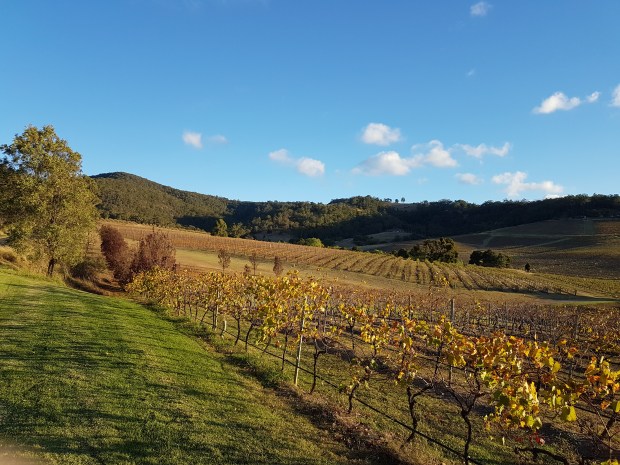
This was our favourite spot of the weekend, situated on a hilltop location at Moon Mountain Vineyard, with incredible vistas. Thomas Allen Wines opened in 2009 and is a small boutique vineyard with a family feel. We received a very warm welcome both from the owners and, the cosy, roaring log fire! It was recommended by a host at another cellar door, which was refreshing as there appeared to be no pressure to buy at any cellar door we visited and no obvious rivalry, although I am sure it exists.

Whilst the winery is relatively new the vines were planted in 1969 and all the fruit used in their Estate Wines are form these vines. Their wines have names uniquely and intimately linked to the team, namely ‘Mango Tree’ Chardonnay, ‘The Doctor’ Cabernet Sauvignon and the ‘Alasdair’ Shiraz, named in memory of a friend.

wp-1465102327537.jpg

© Wanderers Dreams All content and photographs

We arrived feeling slightly jaded from the sip and go experience that wine tasting requires and decided that this Sunday stop would be our only venue of the day. We sampled just one chardonnay focusing mainly on the reds which were all significant quality, so much so that we both signed up as members of Club 1733, named after their street address. The philosophy of this vineyard is to eventually only sell to their members and once they reach 2000 they will close membership. Whilst not purporting to be wine experts ourselves we particularly loved the 2013 Old School Shiraz Cabernet and the 2014 Alasdair Shiraz. The Alasdair is only produced in exceptional vintage years and, as mentioned earlier this is the best since 1965!

wp-1465102328515.jpg

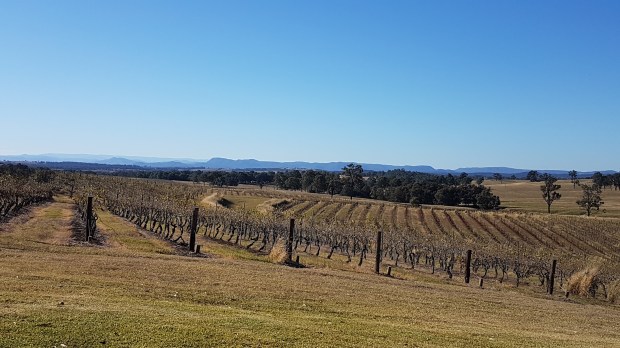
We asked John,”the Boss”, if we could enjoy a full glass of the Old School on their verandah, which has spectacular views across rolling vineyards to the mountains beyond. We sat revelling in the peacefulness and savouring the wine. Once satiated, we then pushed our luck and asked if we might walk along the tracks by the vines across the property and were delighted to have our request granted, although John was unable to guarantee the neighbouring vineyards wouldn’t take a pot shot at us!  Please note that walking among vines and across vineyards is forbidden without express permission as the vintners do not want disease introduced or the vines damaged.

The walk was one of the highlights of the weekend! An hour of ambling along the trails, amongst pruned vineyards replete with the most beautiful birds.  We passed dams and bogs with bullrushes that swayed and rustled in the biting breeze and the panoramic views and light were a photographers dream.  Returning safely to the cellar door to collect our purchases we learned we were the first visitors to make such a request, making it a truly unique experience.

Thomas Allen Wines

Accommodation 

We stayed at the Hunter Valley, Crowne Plaza in Polkolbin, which will allow bookings for one night and has a range of rooms and villas with up to 3 bedrooms.

© Wanderers Dreams All content and photographs

Hectic Ha Noi!

There is no way to arrive quietly in Ha Noi! The drive from the airport is a cacophony of sound and nothing prepares you for the seeming chaos on the roads. Motorbikes, scooters and bicycles seem to out number cars and, it is possible to carry anything by this mode of transport, including a cow on a trailer pulled by a tricycle!

As our time in Ha Noi is relatively short, our guide takes us to the Ho Chi Minh Mausoleum on the way to our hotel in the Old Quarter. Unfortunately, it is closed in the afternoons (open from 8-11am except Friday and Monday) but at least it is relatively quiet in the gardens. Often it is busy with many Vietnamese families coming to pay their respects to Ho Chi Minh, queuing to see his embalmed body in a glass sarcophagus. Photography is forbidden and it is important to dress respectfully (no shorts). The mausoleum itself was constructed in the early 1970’s and is centred in the botanical gardens.

The temple in the gardens is small but the altar is brimming with gifts to the deities.

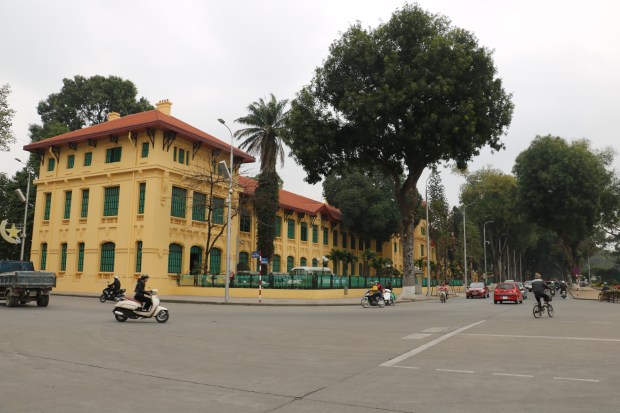
Leaving for our hotel, the roads around the Mausoleum provide beautiful examples of the French Colonial architecture, elegant buildings, often yellow in colour, set on tree-lined avenues. Many embassies are stated in this area.

IMG_5889

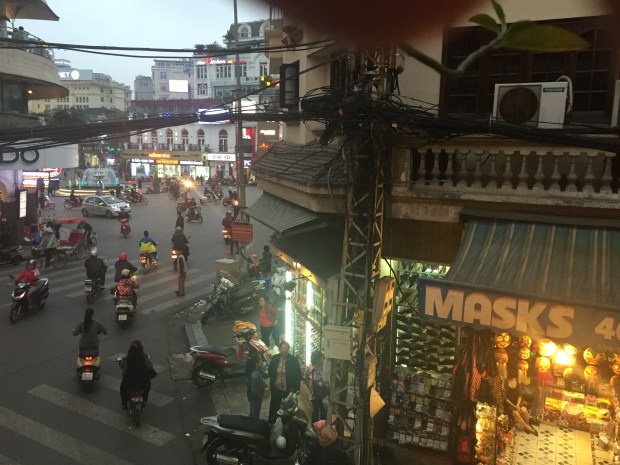
Arriving in Hoan Kiem District, the Old Quarter of Hoi An, it is more than just bustling or vibrant! Ha Noi can not fail to energise you once you have overcome your fear. Crossing the road is an art. At first it appears there are no rules, cars and scooters travel at steady speeds but come at you from all directions and, I mean every which way. The hotel concierge advised just step out and keep walking with purpose! Yikes!

You have to stand and watch for a while before having the courage to just do it. Taking our lives in our hands, my daughter and I step off the pavement and start to walk, our hearts pounding and expecting to end up in hospital. Amazingly enough there are rules and not running over pedestrians is one. As if by magic, the scooters part ways and zoom past either side of us and we make it safely to the pavement the other side of a 4 lane road, our ears reverberating with the sound of horns. One word of advice, once you step off the pavement try not to stop as it is very hard to decide when to move again as the riders don’t know what you are intending to do.

We are staying at the beautifully named Apricot Hotel, opposite the picturesque Hoan Kiem Lake and right in the centre of the Old District of Hoan Kiem.

The much venerated resident of the lake, a giant Swinhoe turtle, which signified the countries struggle for independence, unfortunately died just a few weeks before out visit. Tortoises are sacred in Vietnamese culture and the city mourned the loss of this turtle thought to be 100 years old.

Legend has it that Emperor Le Loi made a sword from a friends metal bar, which miraculously became imprinted with the words “Thuan Thien” meaning “harmonious with heaven”. The sword was used in battle but during a period of peace the king was visiting Thuy Quan Lake and a giant turtle rose out of the water asking for the sword to be returned to the “dragon king”. The king threw the sword into the lake and it was taken by the turtle below the surface to return it to its divine origins, from then on the lake became known as Hoan Kiem Lake or Lake of the Restored Sword.

From the hotel, we take a short walk to the Ngoc Son Temple past locals practising Tai Chi, entering the temple island by the Huc Bridge which literally means the “place touched by the morning sun”. The Ngoc Son Temple (Temple of the Jade Mountain) dates from the 18th century and sits on Jade Island and is dedicated to General Tran Hung Dao who defeated the army of Mongolian Emperor Kublai Khan in the 13th Century, the patron saint of physicians and Van Xuong, the scholar. We visited the pagoda which has a number of golden decorated altars dedicated to various deities and some antique artefacts.

We meet our guide at the hotel for a gourmet tour of Ha Noi. He promptly negotiates some cyclos and we are propelled by these fit cyclists through the warren of streets that make up Old Quarter. Each of the streets is named for the produce they sold from the shops and some vendors still sell the same wares such as Silk Street or Bamboo Street. Take time to look above street level and you will see some very old building frontages.

We sit on small plastic stools or chairs on the pavement, breathing in the wonderful aromas, listening to the sizzling woks amid the bustle of the streets and eating some terrific street food. Pork buns, meat skewers, noodles to die for and, a locally brewed beer at Bia Hoi. We stay into the evening when the locals start to arrive to pick up take outs on their scooters or to sit with their family and friends.

Later we find a backpackers bar above the street, on the corner of Pho Dinh Liet and Pho Hang Thung street, and enjoy a cold beer, ending our stay in Ha Noi pretty much the way we started, bemused by how the chaos just works!

IMG_0137

Accommodation:  Apricot Hotel

Travel Itinerary: I am blessed to have a Travel Manager whom I have been using for many years now. Michelle Michael-Peccora is a seasoned professional, who takes a pride in understanding the needs and experience her clients are looking for and Michelle will come to you. I booked this trip at very short notice and Michelle managed to create a memorable trip for us once again using Buffalo Tours. I call Michelle my travel therapist!

Michelle at Travel Managers

Buffalo Tours

© Wanderers Dreams All content and photographs

Oman: Dreaming under desert stars to sleeping in the height of luxury

IMG_6958

Infinity pool, The Chedi, Muscat

Given that Oman is one of my all-time favourite travel destinations, it makes sense that I have found a few places to rest my head. I thought I would share the best of them with you.

The Chedi, Muscat

The Chedi, Muscat, opened 13 years ago and is a luxury 5-star hotel in Al Azaiba, northwest Muscat on a private beach between the international airport and Muttrah.  It has 158 well appointed rooms and the hotel grounds abound with water features and tranquility.

The choice of restaurants is good and the cuisine excellent although not inexpensive. My favourites are lunch at Serai Pool, fine dining at The Beach Restaurant or the atmosphere of the Arabian Courtyard, followed by Shisha in the lounge.

Whether you are escaping the winter of Europe or looking for some downtime on a stopover from Australia and New Zealand, this is a great choice for that relaxing break. There are 3 well-appointed pool areas to cater for everyone from the family friendly Serai, to the stunning beachfront infinity pool and cabana, to the amazing 100m swimmers dream pool. The spa offers a multitude of pampering delights to meet your jet lag recovery needs.

The hotel staff are courteous and attentive and the location means it is easy to see the sights of Muscat. This kind of luxury does not come cheap of course and prices start from $340 per night.

The Chedi Muscat

Location – Google Map

Sahab Hotel, Jebel Akhdar

No trip to Oman would be complete without a journey into the western Hajar Mountains. You need a 4wd for the trip and you will be rewarded with breathtaking views (see Captivating Oman).

IMG_7068

Enter a caption

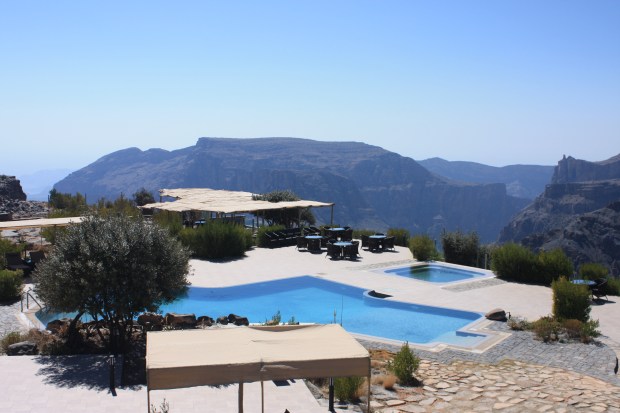
I stayed at the small boutique Sahab Hotel, 2,004 meters above sea level on Jebel Akhdar. It has the most spectacular views and is worth the, at times, scary drive up the mountain road.  You have to pass a checkpoint at the base of Jebel Akhdar and, if you are not in a 4wd vehicle, you will be turned back.

Based on the Saiq Plateau the hotel has vistas of mountains and escarpments and ancient villages with their famous terraces of roses and pomegranates. There are a number of good hiking day tours to take. I walked down the mountain through the ancient villages for 3 hours and was collected by the hotel owner by car for the return journey.

There are a number of activities that can be organised through the hotel staff including goat herding, farming with locals, donkey rides, star gazing and, if you are more adventurous, caving trips.

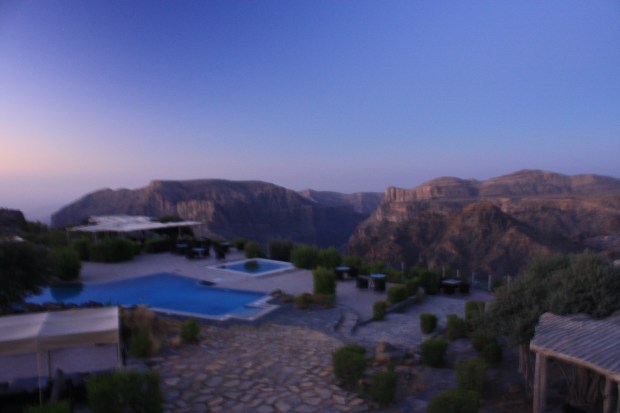
When I stayed it was during December and nights were extremely cold but it was rather refreshing to have a dip in the heated pool and watch the sun set over the mountains. Magical!

IMG_7201

Enter a caption

Sahab Hotel, Jebel Akhdar                                                                                   © Wanderers Dreams

© Wanderers Dreams

Prices are upwards of $250 AUD or 71 Omani Rials per night in peak season (23 Dec – 9 Jan and April to May when the roses bloom). There are only 27 rooms so be sure to book early.

Sahab Hotel Website

Location map

There is a newly opened hotel Alila Jabal Akhdar that I have not yet stayed at, but fully intend to try out on my next visit to Oman.

There is a newly opened hotel on the plateau, the Anantara Jabal Akhdar, however this is a luxury hotel and looks to be approximately $650 per night.

Anantara Jabal Akhdar

Desert Nights Camp

IMG_6045

Desert Nights Camp, Wahiba Sands

© Wanderers Dreams

The Desert Nights Camp is situated on the Wahiba/Sharqiya sands, a 2-hour drive from Muscat. Set admit 11 km of dunes, the camp is luxury with the desert experience. The night sky is truly awesome and the colours of the shifting sands change in the amazing dawn and dusk light.

The camp offers a range of activities for your desert stay including a memorable Sunset camel safari, 4 hour day time camel tracks, 4WD Dune bashing, quad biking, and sand boarding. Locally you can visit a Bedouin family house and enjoy the traditional Omani hospitality of coffee and dates or take a short drive and swim in the green waters of Wadi Bani Khalid. It is worth staying 2 nights.

There are 26 luxury tented rooms decorated in Arabian style. The rooms are air-conditioned (a necessity in the summer) and all have en-suite bathrooms complete with toiletries.

There is a restaurant on site which serves traditional Omani fare and offers local music around the campfire.

The cost of a two night stay is approximately  $1300 per tent in January 2017

Desert Nights Camp

Location Map

© Wanderers Dreams

Sultry Salalah in Dhofar Province,Oman

First visits to Oman usually focus on the major attractions in the north of the Sultanate. In my experience, it is well worth adding a few days to explore the southern Dhofar region of Oman including the provincial capital city of Salalah.

I first visited Dhofar in February 2013 when it was  a dry, sun-parched brown and returned during the khareef in August 2015 to experience its transformation to glorious verdant greens. This province of Oman has a unique climate and is especially attractive to visitors of the Arabian Peninsula in the height of summer, when the air is cool and the mists and rain provide welcome relief from the searing temperatures of the rest of the peninsula.

Visitors from all over the Arabian Peninsula flock to Dhofar to enjoy picnics in the drizzling rain, a choice that would be strange under normal circumstances to an Australian or Briton, but seems natural when you are there. Wadi Dharbat is a popular spot off the Mirbat Road and, the day my Omani companions and I visited, was replete with the sound of happy laughter drifting in the breeze.

Surprisingly, this is not all Dhofar has to offer. There are a number of sights to explore as day trips from Salalah and if you travel north for approximately 3.5 hours, you will find yourself at the edge of Rub Al-Khali, the Empty Quarter. A vast wilderness of deserts sands made famous by English Explorer Thomas Bertram in his expedition to cross the desert from Dhofar to Doha (1000km), arriving in February 1931 and by Wilfred Theiseger in his book Arabian Sands. This year a small party from Outward Bound Oman made this inspirational journey documenting their adventure at Crossing The Empty Quarter and a soon to be published book:

https://www.facebook.com/CrossingEQ/

http://www.crossingtheemptyquarter.com

It was the original account of Theiseger and his amazing journey and survival against the odds, that inspired my fascination and dreaming of the desert therefore I was excited to find myself at the gateway to Rub Al-Khali for the first time. The vast sea of dunes, dappled with wind blown art and, the incredible silence, made me feel so small and insignificant. The beauty in lone plants surviving  the harsh environment and the wonderful light made for stunning photography. I sat atop a dune and reflected on what it must have taken to set out across a seemingly infinite desert.

I travelled to Rub al Khali with a guide in a 4WD for a day trip but there are companies who operate camping excursions further into the desert (see travel information at end of article) and this is something I have every intention of doing in the future.

On the drive to, or from, the desert, take time to visit the archeological site of Shisr believed to be the lost city of Ubar (“Atlantis of the Sands”) and discovered in 1992 by a group of US researchers and British Explorer, Ranulph Fiennes, using satellite technology. The city is thought to have been the crossroads of the frankincense trail and an important trading centre.

Oman is world renowned for the frankincense trees and their aromatic resin and this area is reputed to have been the starting point of the journey of the three Magi or wise men on their way to Bethlehem. The groves are numerous and I learned that that there are 3 grades of frankincense with the white colour the highest quality.

Day trip to Job’s Tomb

The tomb of the prophet Job is just 35km north of Salalah on the hill top of Jabal al Qara’ and is well worth the drive. En route to this important religious site, I met camels crossing the road, cattle and goats grazing under shady trees and visited frankincense groves.

There is a nominal charge for visiting the site (baisa rather than rials) and you are allowed to take photos. Out of respect for this religious site I covered my head during my visit.

Coastline of Mughsail & Sarfait Road

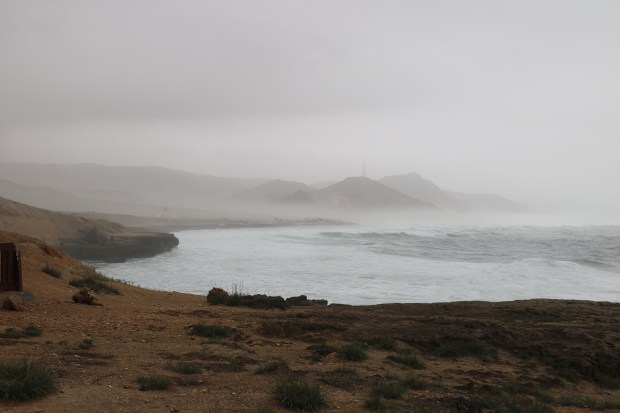
One of my favourite spots during my two visits to Salalah, was the rugged, spectacular coastline west of Salalah at Mughsail. I watched the fishermen repairing the nets in the bay and the frenzy of seabirds as the boats returned to shore with their precious cargo.

At the visitor centre, I enjoyed watching young children startled by the blow holes when they suddenly unleashed the power of the sea and the shrieks of joy as the cold water cascaded down on them.

I travelled with Omani friends last year and we took the Sarfait road beyond Mughsail towards Yemen (2 hours away, so there is no risk despite current troubles in Yemen). The views from this impressive, British designed road, are breathtaking.

IMG_1940

IMG_1941

© Wanderers Dreams

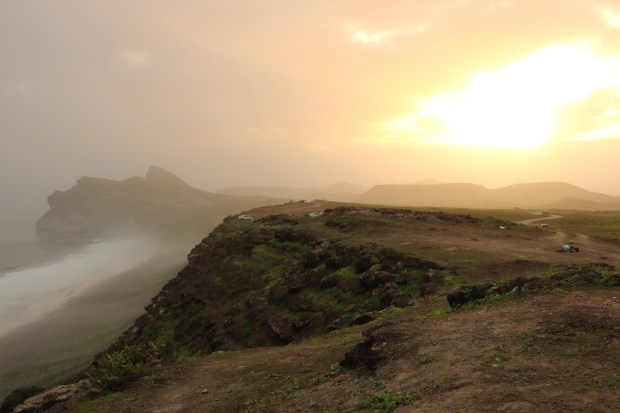
On this windy steep road, we climbed nearly 1000m in the car and at the top I gazed back at Mughsail, blanketed in a coastal haze that made it even more impressive. The road stretched onwards downhill with more u bends and views into wadis where camels grazed. The rocks, mainly limestone, are sparsely populated with succulents, some small boabs and, in places coastal frankincense trees.

We drove back to the cliff tops just above the bay of Mughsail and picnicked with glorious views in both directions.

We watched the sunset over the cliffs and the sea and I felt enormously privileged to be able to travel to such awe-inspiring destinations

IMG_5266

© Wanderers Dreams

Travel information

On the first trip to Dhofar, I stayed at the 147 room Hilton Salalah Resort hotel about 15 minutes outside Salalah on the highway to Mughsail and the shores of the Indian Ocean. Current prices approximately AUD$350 per night for August 2017

Address: As Sultan Qaboos St, Salalah 211, Oman

Phone:+968 23 133333

http://www3.hilton.com/en/hotels/oman/hilton-salalah-resort-SLLHIHI/index.html?WT.mc_id=zELWAKN0EMEA1HI2DMH3LocalSearch4DGGenericx6SLLHIHI

In August 2015, my choice as a base was the Salalah Rotana Resort at AUD$352 per night including taxes as this was peak season.

Address: Taqah Road Souly Bay, Taqah Road, Salalah, PC 215, Oman

Phone:+968 23 275700

http://www.rotana.com/rotanahotelandresorts/oman/salalah/salalahrotanaresort

For excursions into the Rub al Khali:

One company who operate camping excursions further into the desert over 4 days is

Silk Road Tours Oman / Salalah Tour Oman, Salalah, Oman

Phone: +968 9066 5544

Mobile: +968 9949 3655

Email: mohamed_salalahtour@yahoo.com

Internet: tour-salalah.comsalalah-tour.com


Secret…shhhh! As-Sifah Beach

Want to escape the bustle of Muscat – join locals for a picnic at the beautiful As-Sifah beach?

With typical Omani hospitality,  I was treated to an afternoon of rest and relaxation at As-Sifah beach by some local friends.

The long, pale sands of As-Sifah beach are just an hours drive south of Muscat along Route 1 and Yeti Street. The road meanders through the mountains before tumbling to the sea, and offers some spectacular scenery along the way. I was the fortunate passenger and spent the whole drive gazing out of the window in awe of the rugged terrain and, slightly nervous of the seemingly flimsy barriers and perilous car flight that awaited if my driving companion misjudged the road.

We stopped where possible so I could take photographs of the old Dhow resting on the sand of a wadi and capture some of the spectacular views along the route.

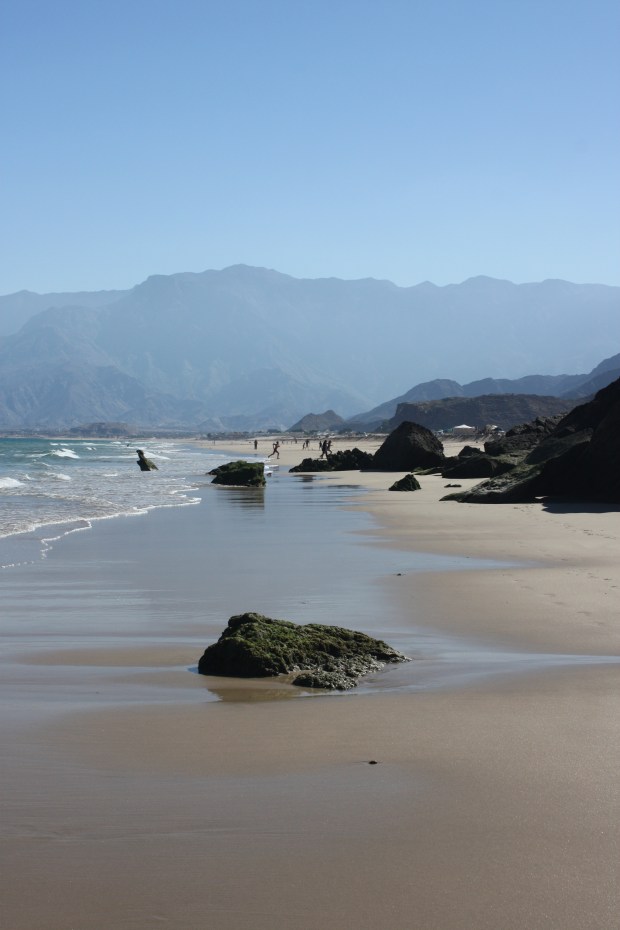
We eventually reached the old fishing village of As-Sifah and were greeted with friendly waves by locals before driving on to the beach. Living in Australia, I am privileged to have an abundance of amazing beaches to choose from and I can truthfully say that the beaches of Oman are in the same class.

IMG_6903

As-Sifah beach stretched out before me, I soaked up the magic cast by the silhouettes of mountains against a blue sky, which cascaded to the sands and crystal clear sea, a vista that never fails to still my heart.

Many families had already secured their place and delicious smells wafted through the air along with laughter and chatter. Whilst it was busy, we had no trouble finding a location for ourselves in relative solitude, where we could unwind, relax and savour our own Omani delights.

Map of As-Sifah

© Wanderers Dreams All content and photographs

Captivating Oman

The city of Muscat, in the Sultanate of Oman is just a one-hour flight from Dubai, and I’ve obtained my tourist visa on arrival.

At my city hotel I’m met punctually, by professional guide, Yousef Al-Jabri, from one of Oman’s most reputable tour companies. He’s impeccably turned out in traditional dress, and welcomes me warmly. I choose the passenger seat of his 4WD, to enjoy the amazing views and listen as Yousef teaches me about the culture of Oman, its openness and ability to combine tradition with freedom. His Majesty Sultan Qaboos, the highly respected Head of State, has instigated huge changes since the 1970s, building schools in every village, exchanging connecting desert tracks for sealed roads and creating infrastructure to encourage progress and growth.

I have long been excited about this visit to Oman and can quickly tell that my six night round trip won’t disappoint. First stop is the bustling fish market at As-Seeb, Oman has a long sea-faring history and fish is a diet staple.

From As-Seeb we venture 100 km north to the restored fort at Nakhal. Constructed in 1834 of mud and straw with palm frond ceilings, it’s built on the foundations of a pre-Islamic structure. I gaze from the watchtowers to the beautiful Hajar mountains nestled above the date palm farms, from which the fort derives its name.

We pass through these farms with their ancient Falaj irrigation, to the natural hot springs of Ath-Thowra (meaning ‘to boil’) where I dip my feet in the water, inviting the fish to give me a natural pedicure.

We take the 43 km drive over an unsealed road to Wadi Bani Auf and on to the dramatic, narrow, twisting Snake Gorge. It is a popular trekking route, but caution’s required during the rainy season as flash floods can prove fatal.

Stopping on the descent into Bilad Sayt, we photograph this picturesque,
old village with terraced fields and mud-baked houses, then park outside the village, amble through the streets, and enjoy the shade of the date palm terraces.

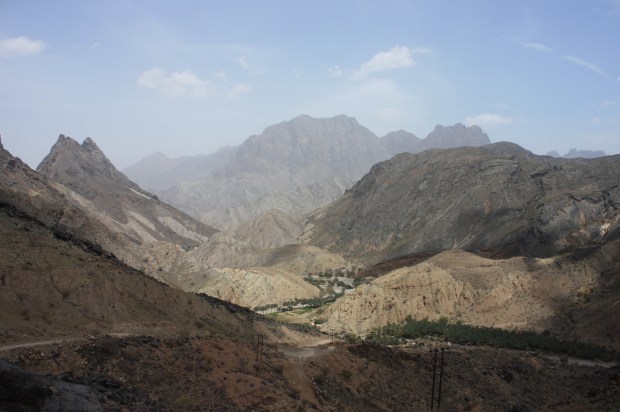
Leaving Bilad Sayt, we start to traverse the Hajar Mountains, a four hour, 70km drive that is truly spectacular. It is not often on my travels that I feel so completely overwhelmed with beauty and a spiritual sense of connection – emotions I hadn’t anticipated in Oman.
IMG_5795

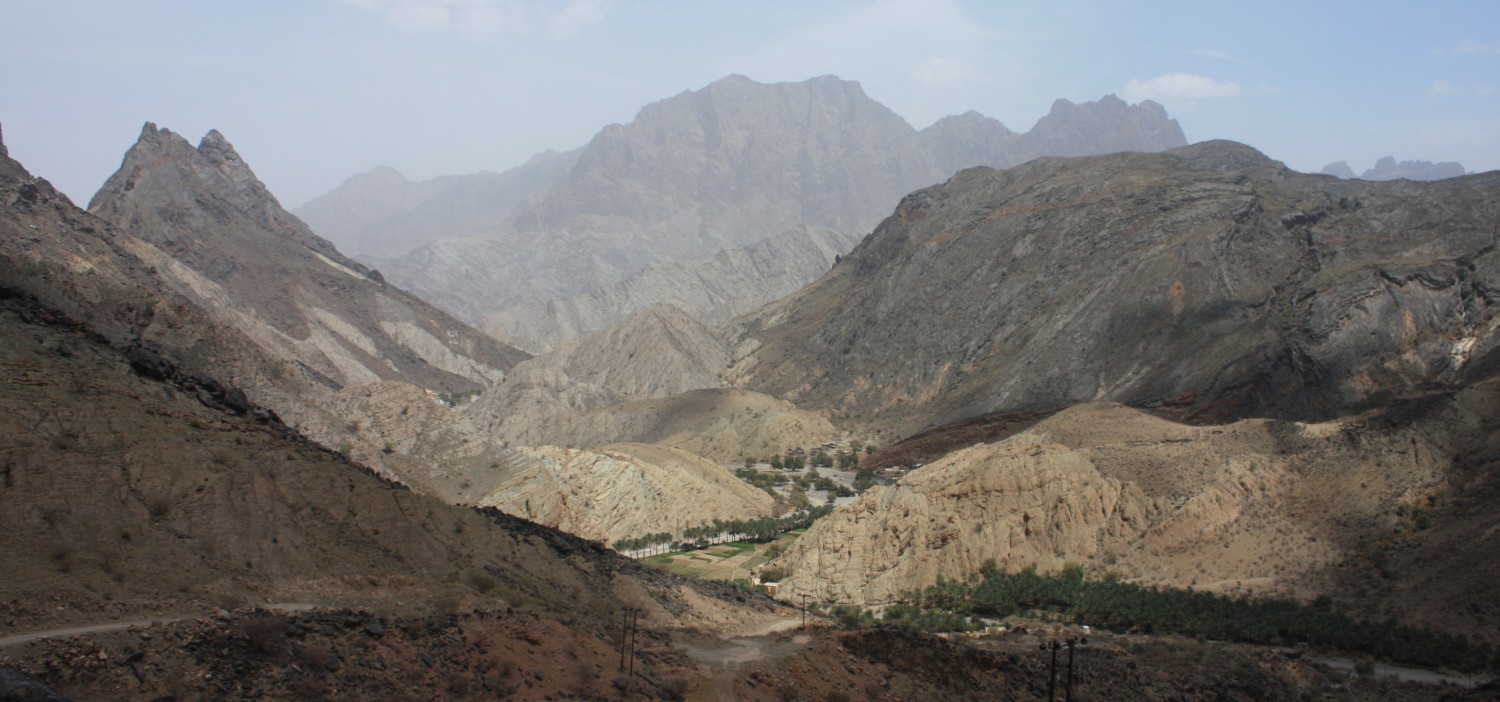
Breathtakingly beautiful Hajar Mountains, Oman

The road from Bilad-Sayt is a winding ascent with a series of u-bends. Turning the last bend, the view quite literally takes my breath away. My ‘stop now, please’ request startles Yousef who thinks I’m suddenly taken ill. He relaxes when he realises that this mad English-Australian lady just wants to take a photo – although no photograph could capture this outstanding natural beauty.

We descend into Al-Hamra village at the foot of the Hajar Mountains, one of the oldest villages with well-preserved Yemeni-style mud-brick houses. In the small museum, Bayt Al-Safa, there’s a taste of life as women lived it.

I try my hand at pounding wheat to flour, observe women weaving traditional patterns using a loom, have my forehead painted with a sandalwood and saffron henna mix as the women would for weddings. After hhe tour, I enjoy the hospitality of the museum staff in their upper room majlis (sitting room) listening to other travellers’ tales and fortunate to hear the Arabic discussions of visiting village elders.

My overnight stay is a tent at The View, overlooking the town of Al-Hamra. The sounds of goat bells and a herdsman – such a pleasant alarm clock – wake me, it’s wet, windy and dusty but very peaceful and on a clear day the sunrise would compensate the early start.

After breakfast we take the road along Wadi Ghul, known in Oman as the Grand Canyon of Arabia, and head for Jebel Shams, Mountain of the Sun, at 3075 m, Oman’s highest mountain. Our 4WD copes well with the partly unsealed road, and there are barriers to help prevent accidental plunges down the 1000 m drops. The views from the summit are awesome and, gazing down into the canyon, I watch falcons catching the warm air currents looking for prey.

IMG_5867On the return journey, we stop at the village of Ghul and, armed with a plentiful water supply,
take a memorable short walk into the canyon
through the date palms and beautiful pink flowers of the Oleander.

From Ghul, it’s a short drive to BaHla, famous for its potteries and locally, for its legendary evil spirits, the Jinn. BaHla fort, a UNESCO World Heritage site dating from pre-Islaamic times, is being restored and has since been opened to the public.

By this stage, my appreciation of forts is on the wane, but it is completely restored by the beautifully preserved Jabrin Castle, undoubtedly my favourite. Constructed in 1675 by the Imam Bil-arab bin Sultan as a centre of learning, (astrology, medicine and Islaamic law) it offers great insights into the way of life in a bygone era. I am amazed at the skillfully carved doorposts and doors, painted ceilings and Arabic calligraphy, all of which speak of a rich artistic heritage.

There are excellent examples of falaj – primitive air conditioning, used also for pouring hot date honey onto ill-advised marauders – date stores and multiple majlis. Despite the heat, I climb the keep to gaze delightedly over the surrounding plains to the mountains.

We enjoy lunch in Nizwa, a large town about two hours from Muscat. It’s popular and ideally situated for exploring the area, so pre-booking a hotel is essential. Nizwa’s not always been hospitable to travellers, as famously described in Wilfred Theiseger’s Arabian Sands, when its conservative Iman threatened the author with imprisonment or death.

I briefly relish the wonderful views of the town from the round tower of 17th century Nizwa fort before spending the morning browsing the Souk for souvenirs, engaging with friendly locals tolerant of my simple Arabic.

Refreshed after a night in Nizwa, Jebel Akhdar, ‘the green mountain’, beckons. It is so called due to its climate, fruit orchards, and the gardens of roses for producing rosewater. The downward journey from the plateau is treacherous, and entry to the mountain road without the low gears of a 4WD is forbidden. In the foothills lies the ancient village of Birkat Al-Mawz, ‘pool of bananas’, though the plantations are now mainly dates as, according to Yousef, the bananas were wiped out by disease.

Leaving the mountain ranges for desert sands, we take the highway to Ibra and on to the Bedouin village of Bidiyyah, on the edge of Wahiba Sands. The village is a three hour drive from Muscat and half this from Nizwa.

I am spending two nights at the luxury, air conditioned Desert Night Camp just within the sands. Alternatively, choose the more authentic 1000 Nights Camp 19 km into the desert, with traditional Bedouin Goats hair tents and the luxury of a swimming pool. Both camps offer camel trekking, horse riding, dune driving, sand boarding and buggy driving, guided by local Bedouin who are extremely knowledgeable about the desert.

We visit an authentic Bedouin tent, politely remove our shoes and accept their famed hospitality, coffee with cardamom, tea and dates. The friendly women chat to us in a mix of Arabic and English, sharing a joke or two, enjoying the universal language of laughter.

I enjoy the peace and tranquility of a morning camel trek. The gracefulness of these “ships of the desert”, their easy sway and the only sound, their footsteps in the sand, transports me to another era. I am staggered by the agility of my Bedouin guide, who seamlessly transitions between precarious riding positions. He explains to me how the Bedouin would navigate across the desert, understanding the shifting sand landscape and using the sun, moon and stars as navigational aids.

Driving through the desert is a reminder of its scale and the outstanding beauty of this harsh environment. It captivates and enchants its visitors, whether with the romantic notion of Arabian nights and Scheherazade or the clear skies, shifting patterns of sand, and changing light from dawn to dusk.

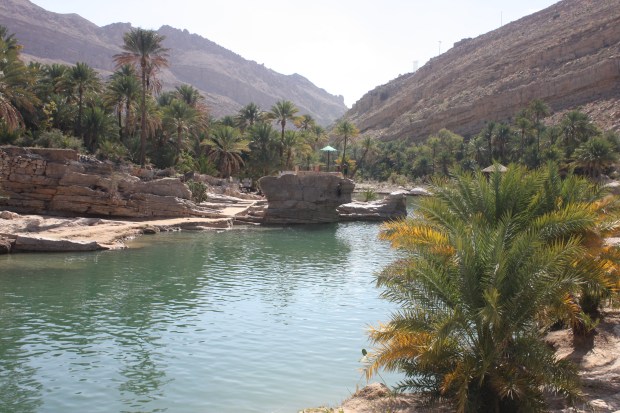
From the desert camp, we travel to Wadi Bani Khalid, a canyon with pretty date palm farms and small villages, famed for it’s natural beauty. Due to the natural spring in the mountains there’s a clear, blue pool of water all year round where people swim, enjoying the coolness. There’s a path along the canyon to Moqal Cave and a small cafe by the pool for refreshment on the way back.
IMG_8271

We continue our journey to Sur, a sea-faring town on the Gulf of Oman, where I enjoy watch the carpenters ply their centuries-old craft of building traditional dhows, and visit the small Maritime museum nearby.

In the evening, we drive an hour up the coast to Ras Al-Jinz, famous for its endangered green turtle nesting site. Booking is essential and escorted tours start at 9pm every evening. It’s possible to stay at the reserve and join a dawn tour to catch the last few departing turtles.

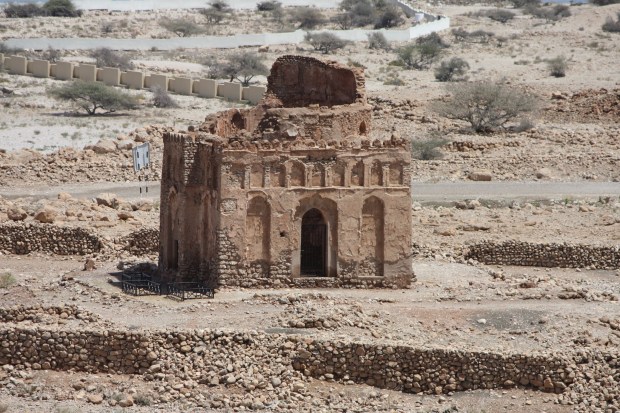
The end of my road trip is along the Sur-Qurayat coastal highway. We visit Bibi Miriam’s tomb at Qalhat, stop for a memorable swim at beautiful Fins Beach before proceeding to the Bimmah Sinkhole in Hawiyat Najm Park, enjoying the gatekeeper’s hospitality before returning to Muscat.
IMG_6088

Bibi Miriam’s tomb, Qalhat

The descent into Muscat reveals a city of white houses basking in the sunlight nestled between the mountains and the beautiful Indian Ocean, a befitting end to a captivating journey!

© Wanderers Dreams All content and photographs